Hand painted prosthetic contact lenses
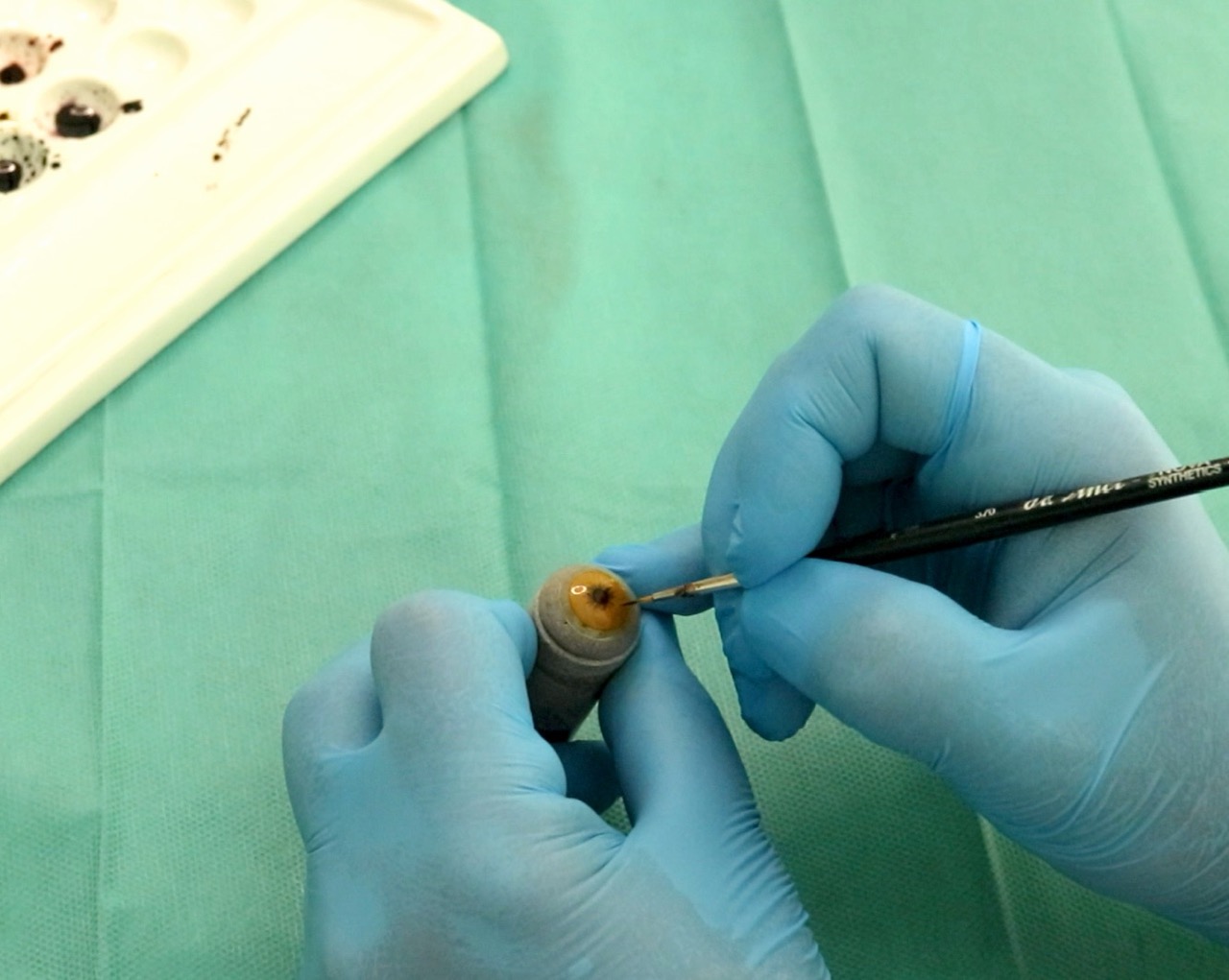
Clinical possibilities, fitting particularities and patient rehabilitation
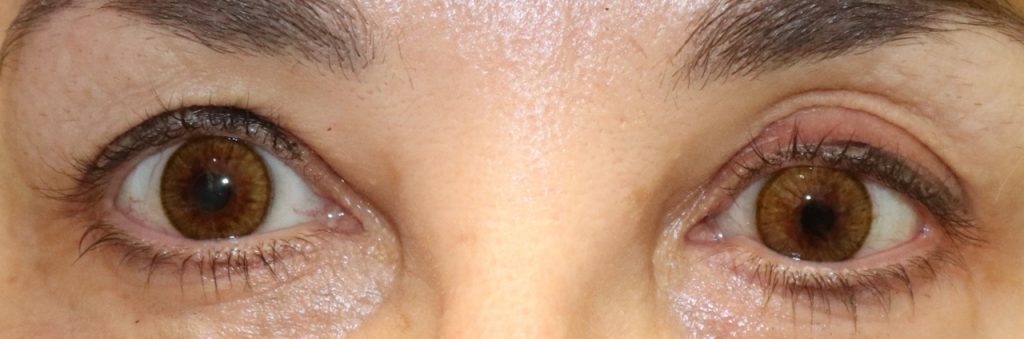
Prosthetic rehabilitation with contact lenses, represents one of the most emotionally rewarding and technically demanding areas of specialty contact lens practice. Beyond simple cosmetic enhancement, these lenses can significantly improve quality of life by restoring facial symmetry, reducing photophobia, minimizing diplopia, masking ocular disfigurement, and even improve residual visual function and acuity (Figure 1).
Modern prosthetic lens technology now allows highly customized solutions through personalized iris painting, pupil design, limbal and scleral reproduction. In addition, most of the specialty lens geometries can be fitted and manufactured, such as those for irregular astigmatism or wavefront-controlled optics, bringing together both worlds, aesthetic symmetry and upgraded visual performance.
Any fitter who wishes to deal with prosthetic rehabilitation, should be ready to frequently encounter strong feelings during interactions. Many of those being expressions of happiness and gratefulness but some of disappointment when a patient’s subjective perspective has not been met. Therefore, sufficient clinical preparation and knowledge of the product portfolio which combines aesthetic, fitting and optical correction capabilities options, bonded with sincere compassion, are the key success points for contact lens prosthetic rehabilitation.
Clinical indications
Patients requiring prosthetic lenses often present with complex ocular histories, with long term surgical and pharmacological treatments. In many of these cases, the psychological burden may be as significant as the aesthetic and visual symptoms themselves.
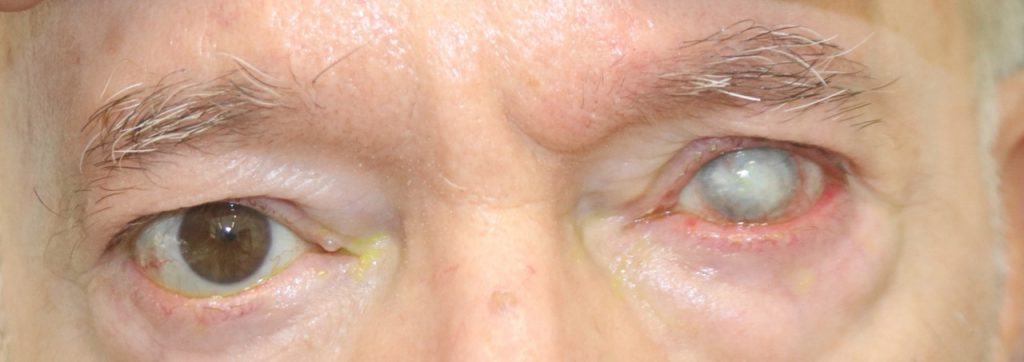
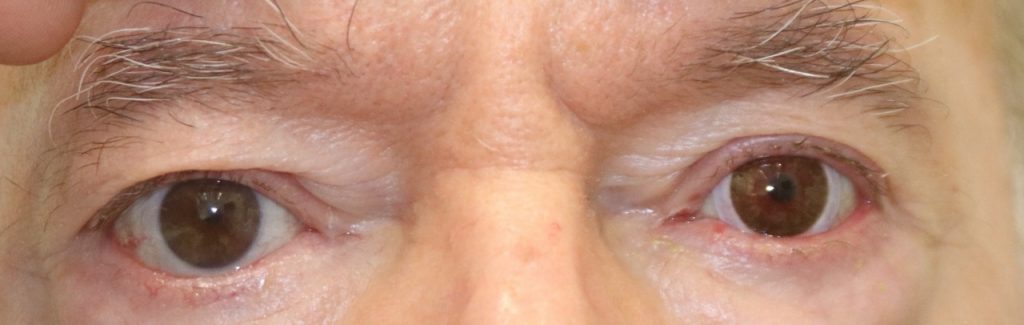
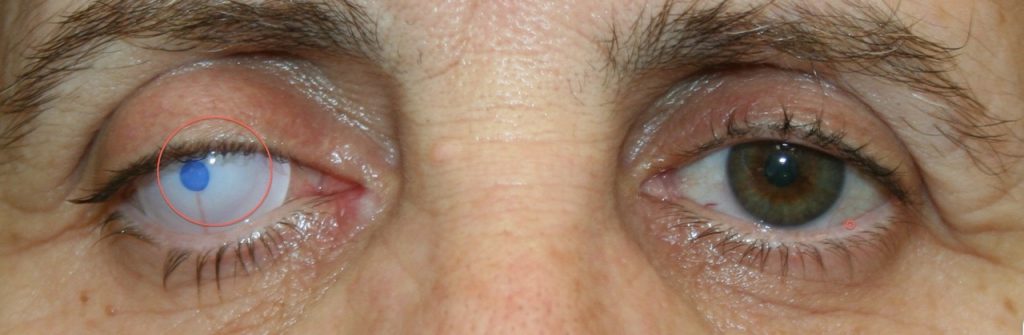
The most frequently met cases seem to be those with some extend of leucoma, therefore with opaque or semi-opaque corneal tissue, resulting in white or greyish corneal color respectively. Attention should be given to those cases if some visual perception is present, even non-functional, i.e., light perception or hand movement. For these ones, transparent or semi-transparent (to mask corneal opacity) black pupils should be considered (Figure 2 and 3).
Another “patient group” are those with lack of some area of iris structure. Cases can extend from iris coloboma to zavalia syndrome, meaning total lack of a pupil (Figure 4). These patients may experience intense photophobia, disturbing photopic phenomena at lights and reduced visual acuity. In some of those cases, corneal trauma is present, with localized opacities from penetration or previous suturing. In these, additional parameters might interfere, such as irregular astigmatism and light diffusion, sometimes combined with line-of-sight displacement, which can be easily measured with topography. These are cases which require a careful selection of pupil diameter, to improve vision without reducing useful visual field, as well as fitting of soft lenses for irregular astigmatism and keratoconus, combined with a hand-painted artificial iris (Figure 5).
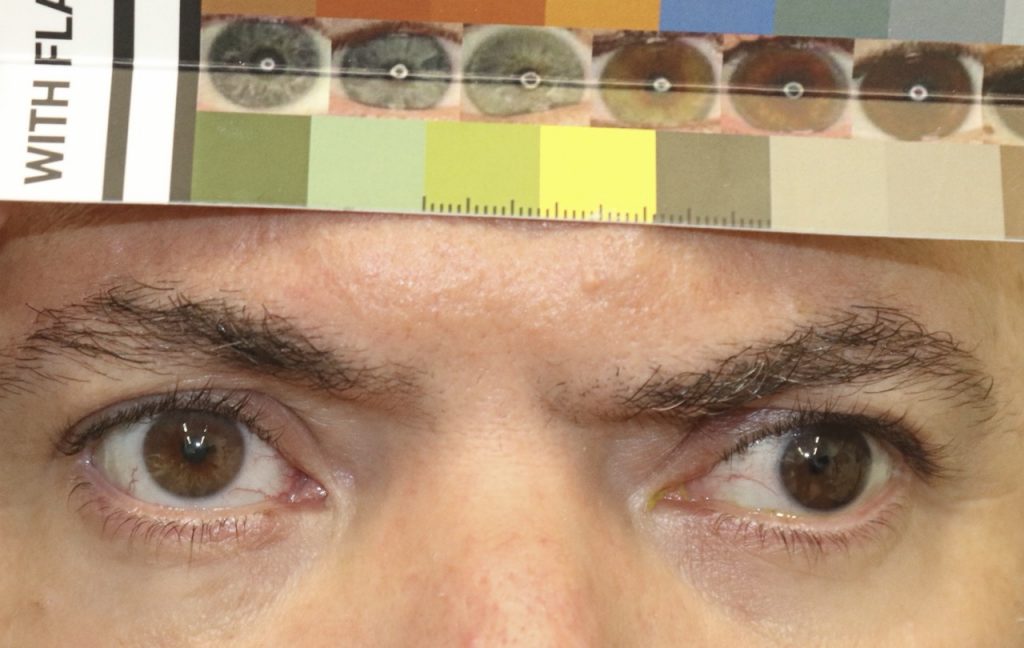
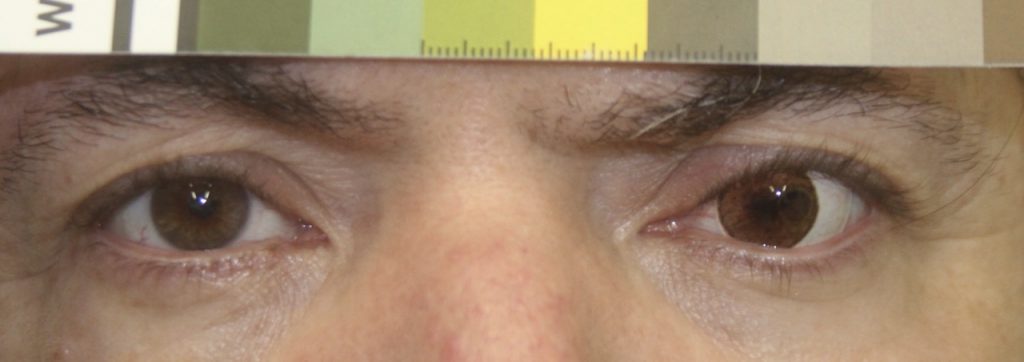
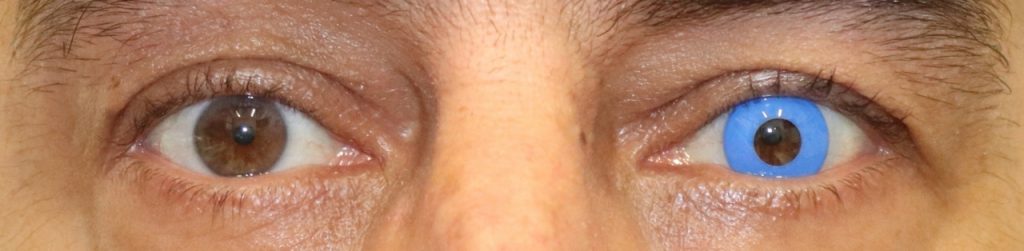
From the fitters’ point of view, possibly the most demanding cases are strabismus cases. Non rotational symmetric lenses are fitted with large diameters, incorporating prismodynamic stabilization, since any non-predicted lens rotation will end up in an asymmetric iris position. In some cases, pilot lenses are manufactured and fitted before deciding on the final lens parameters and the final iris positioning (Figure 6). Facilitating fitters work, fitting lenses with special markings have been designed to help the fitter decide iris position and possible lens rotating position in vivo. Small angle strabismus is sometimes a masked phenomenon with prosthetic lenses; not only because they are difficult to evaluate, but because in irregular corneas, normal lens geometries might be fitted displaced. The easy reassuring way to avoid unwanted surprises is to fit the chosen lens geometry with a colored iris, to justify lens position and ocular symmetry (Figure 7 and 8).
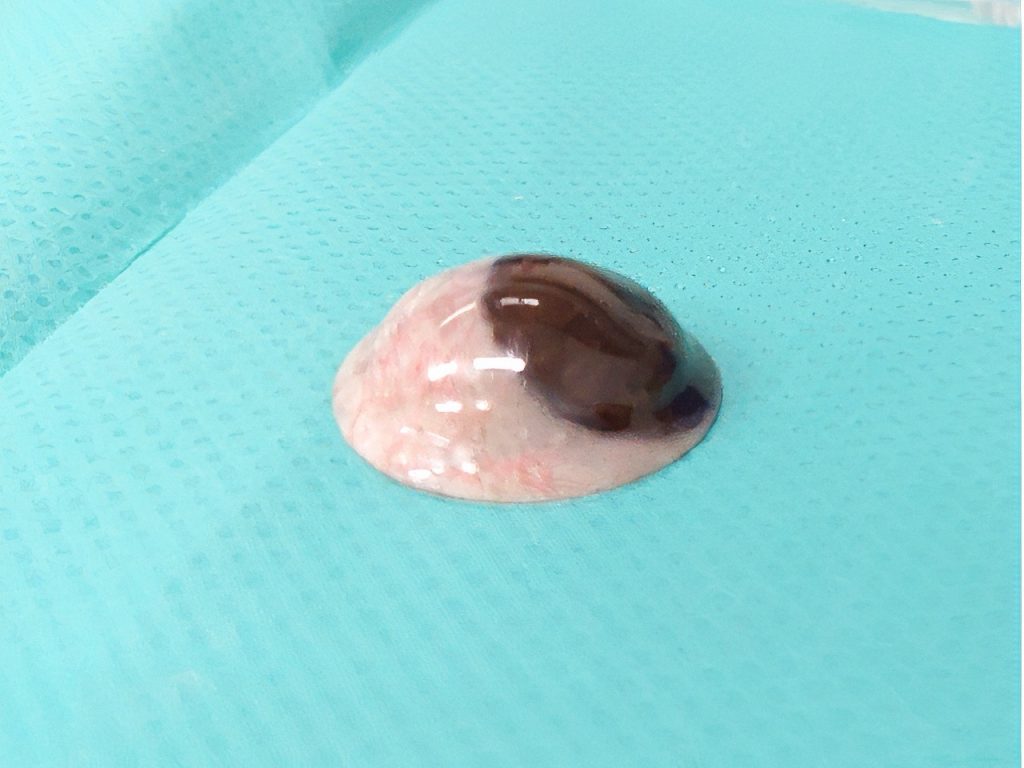
It is not uncommon to partially rehabilitate cases of initial stage of partial phthisis, cases where some of the ocular volume has been lost and sometimes a serious anomaly in the corneal shape is present. Even though scleral prosthetic lenses would be the ideal solution, hydrogel prosthetic lenses are more patient and fitter friendly (Figure 14 and 15). In those cases, we use lenses with enhanced volume, moving from a couple hundred microns to four to five hundred microns center thickness, larger than the usual diameters, providing as much lens volume as possible to improve ocular symmetry. Moreover, due to corneal shape, inverse geometry lenses can be used to secure lens stability (Figure 9).
Artwork of hand painted prosthetic lenses
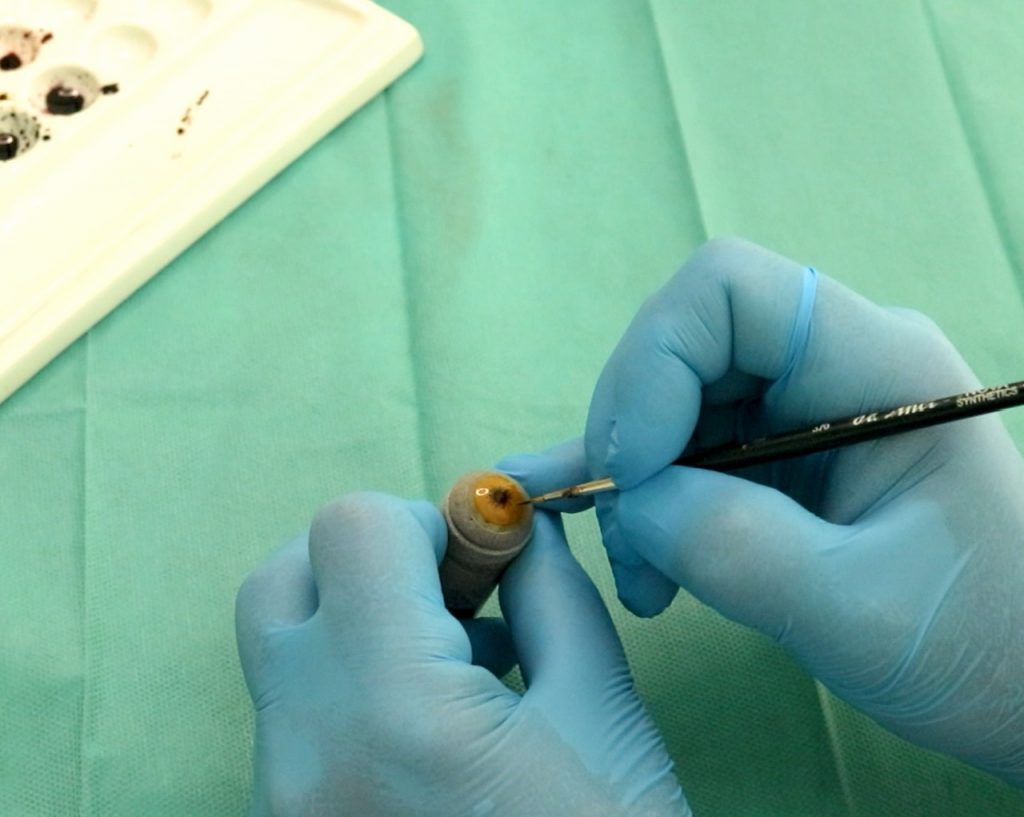
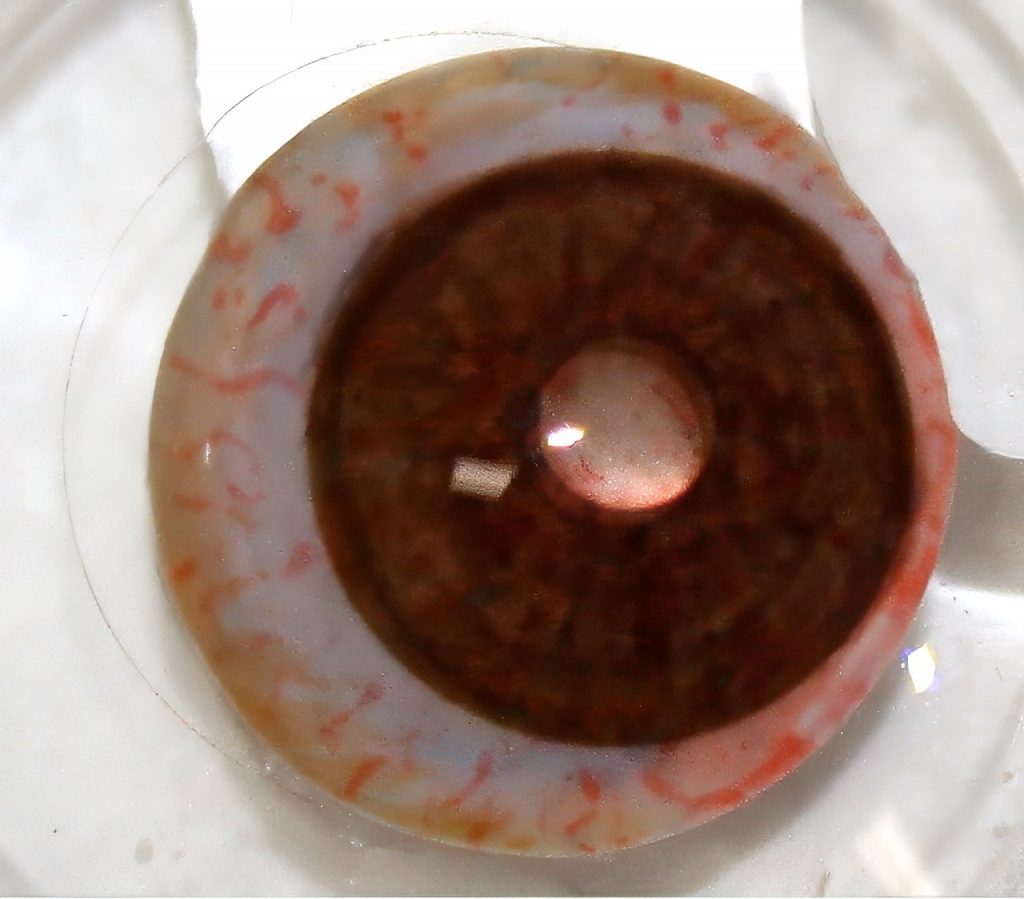
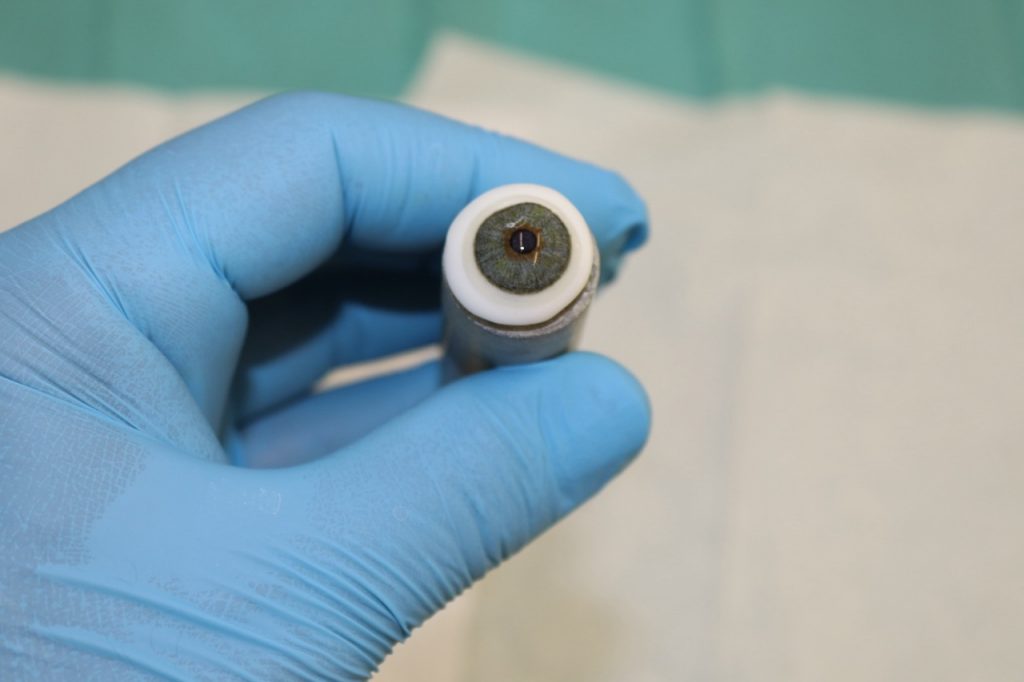
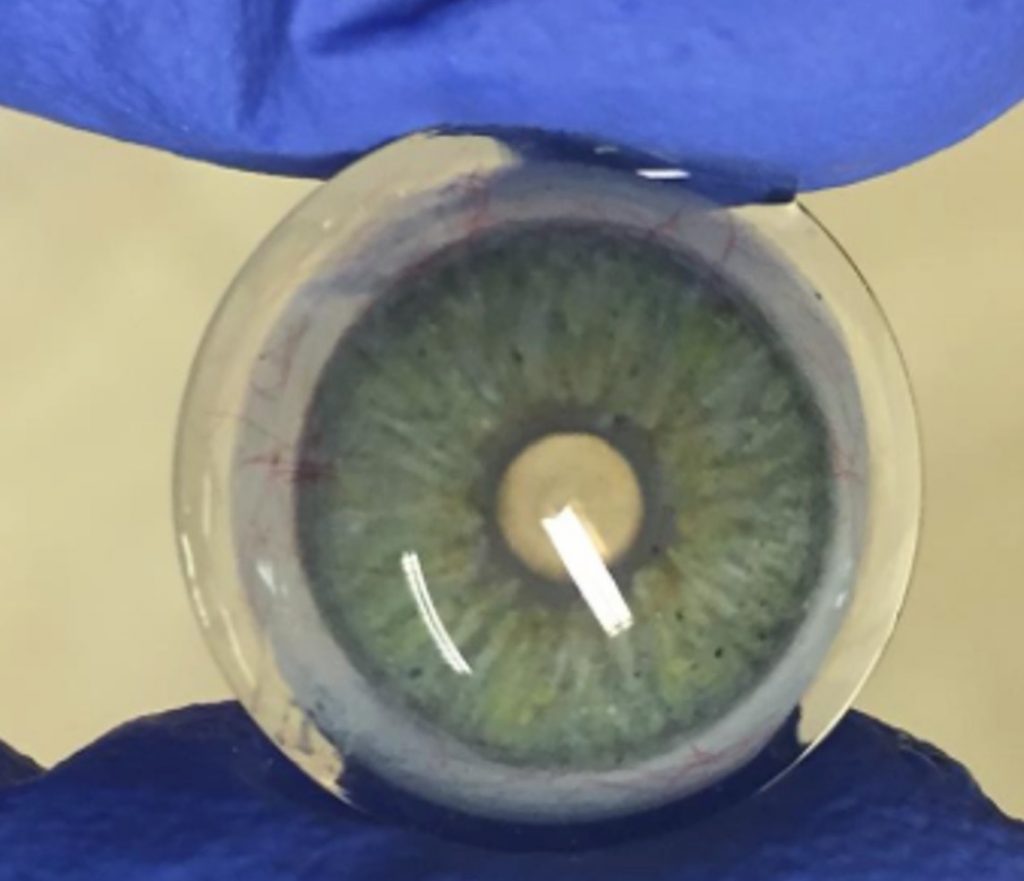
Since a natural three-dimensional tissue, the iris, magnified by the anterior chamber, has to be replicated on a thin hydrogel contact lens, one thing is for sure: Multiple layers of color have to be adopted to imitate this complex part of the eye. Either for the iris but as well as for the sclera, our color artists work in more than twenty layers to render the natural ophthalmic appearance, but fine tune the color hues as well. Even dark iris colors have their own complexity, since hue differences are visible in bright light (Figure 10). In many cases light blockage is essential, so we always apply a dark opaque layer at the back side of the lens while at the same time highlighting the multilayer colors, without interfering with the condition of the underlying iris. The scleral coloration should not be underestimated, which by itself must imitate the structure of the sclera and its transparency, as well as the tenons capsule and conjunctiva (Figure 11). Taking the responsibility to imitate nature, our artists do not limit themselves in creating separately iris collarette, limbal rings, iris micro crypts or limbal blending but hand paint the ocular anterior segment as a unique artwork with all the features blended together, for every individual eye (Figure 12).
Aesthetic possibilities of hand painted hydrogel lenses
The fitter has to clearly know the possibilities that soft prosthetic lenses have, in order to choose the right parameters for each case:
- The possible iris diameters.
- The possible pupil diameters in black opaque or transparent.
- The possibility of the white scleral part of the lens, with sclera color and veining, indicated for cases of megalocornea of the affected eye.
- The maximum diameter possible for each type of geometry and lens radii; due to lens blank limitations and more complex geometries, such as inverse or prismodynamic stabilized, the maximum lens diameter can vary.
- In cases of strabismus, the range of possible iris displacement.
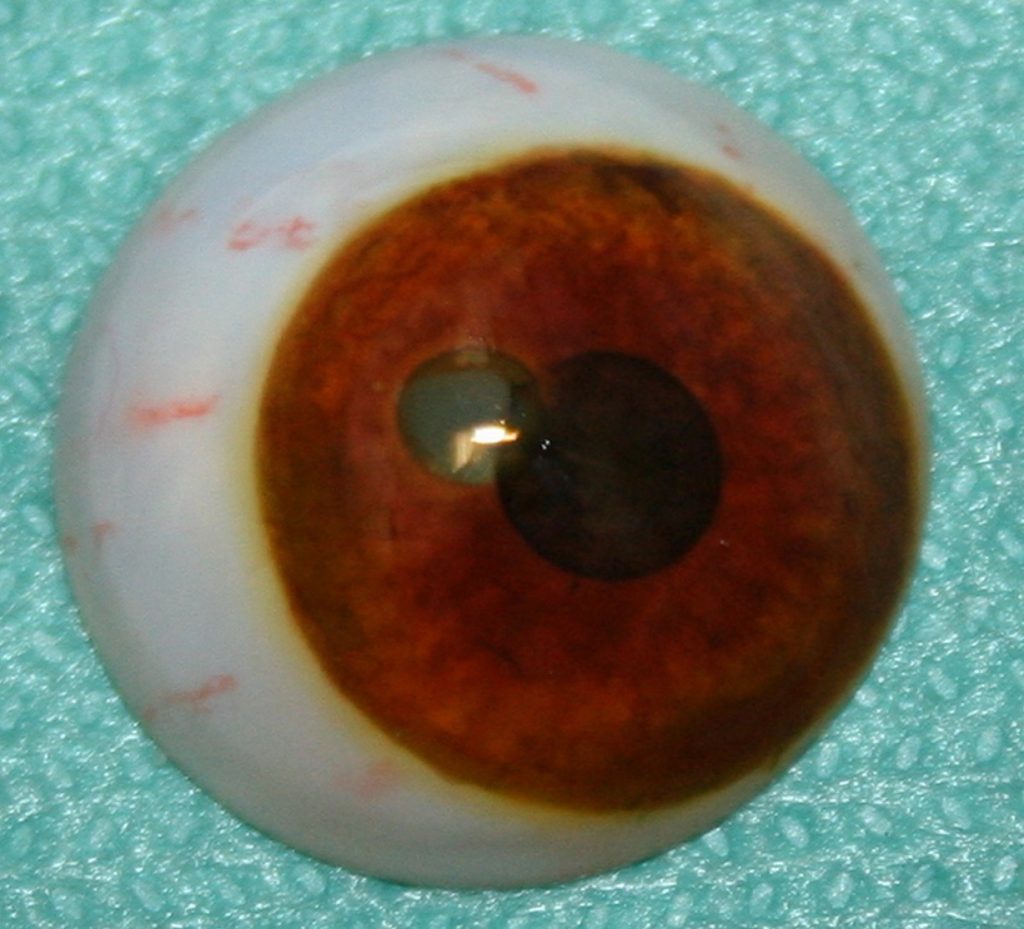
- The possibility of placing a transparent pupil in a displaced position when is not centered and passage of light is considered vital to avoid further strabismic deviation (Figure 13).
- The option of providing a semi-transparent to light pupil, masking unwanted aesthetic issue providing light passage at the same time.
- The option of having a dark back side opaquing layer which separates the final iris color from the underlying corneal condition and color.
Choosing the right color
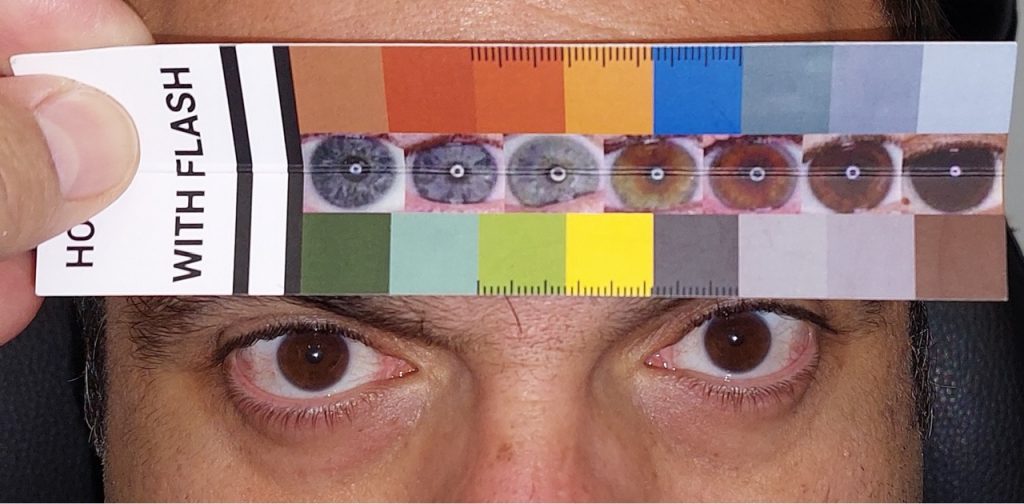
The loop of the subjective patient’s appearance, the fitter’s expertise and the contact lens manufacturer’s possibilities, has to interact constructively in all directions. As the relief of the patient’s symptoms is the main goal, a careful ocular history and interview is the basic starting point. Then, according to the possibilities, the lens expert has to be sure of the solution that can be delivered and communicate it clearly to the patient. Having established the previous, the close collaboration and good communication with the manufacturing laboratory is essential, to finalize the fitting with the most appropriate lens design and coloring structure. When hand painted lenses are chosen, color palettes and digital color samples have serious disadvantages and can very easily mislead fitter and patient. Thus, our technique includes a proprietary photo shooting, using a color calibration ruler, printed and provided by us, offering a stable calibration pattern in the fitter’s hands as well as in our artists’ working environment. Of course, in coloring, sometimes differences in flashlight intensity, flashlight focusing design, color temperature, room lighting and of course camera, lead to differences, which our artists can compensate for via the standard calibration ruler to create the best possible, natural iris reproduction (Figure 16).
Psychological impact
Perhaps the most underestimated aspect of prosthetic lenses is their emotional impact. Many patients experience social withdrawal, anxiety, or reduced self-confidence due to visible ocular differences.
A successful prosthetic fit may dramatically alter interpersonal interaction and psychological well-being. For many patients, the result is not simply a contact lens, but restoration of facial identity, confidence, and social integration.
Conclusion
Prosthetic contact lenses remain among the most customized and patient-centered areas of specialty contact lens practice. Their successful fitting requires technical expertise, artistic understanding, and empathetic patient management.
For the specialty contact lens fitter, these lenses represent an opportunity not only to improve vision and comfort, but also to profoundly influence the patient’s quality of life. Modern technologies, customized manufacturing and advanced hand-painted systems continue to expand the possibilities of ocular rehabilitation and cosmetic restoration.

Lefteris Karageorgiadis, experienced optometrist, ocularist, and contact lens specialist with more than 30 years of clinical, manufacturing, and research expertise in advanced vision care. Founder and head of EYEART Laboratories and EYEART Optical, specializing in custom contact lens design, ocular prosthetics, keratoconus management, scleral lenses, and low vision rehabilitation. Extensive international experience in clinical optometry, refractive surgery support, and innovation in wavefront-guided and prosthetic contact lens technologies, with numerous scientific publications and presentations at leading European and international congresses.