
The legacy lab
Too much “baggage” for success?
Legacy labs sometimes rely on outdated technologies and processes, even when new equipment has already been acquired. This has many undesirable effects on efficiency and makes it difficult to compete with start-ups that enter the market with the aim of keeping pace with changes in the production landscape. However, it is possible for legacy labs to seize windows of opportunity and adjust to advances in equipment and procedures.
First, what is a legacy lab? I define it as a lens producing facility that uses processes that are centered on machinery and tooling that has been superseded by equipment and procedures in use in the last decade. A short list of the legacy tools includes manual lathes, three axis air-bearing CNC lathes, lens blanks in collets, tapered or screw-on blocking tools, spin blocking, pitch polishing, manual inspection, and manual order-entry and tracking.
Some of these items are still in use even in productive labs, producing spheres and aspheres. Here are the effects of each of the above-mentioned items:
- Manual lathes: These lathes are limited in the lens designs that they can produce. The poor surface quality requires pitch polishing.
- Three axis CNC lathe: These lathes are limited to corneal and mini-scleral designs.
- Lens blanks in collets: This practice can result in poor centration control, distortion leading to poor optics and possible tilt leading to edge thickness variation problems especially with scleral lenses.
- Tapered or screw-on blocking tools: These tools have poor security on the lathe spindle and internal debris affects prism control. Used with a collet blocker, this system can be prone to poor centration.
- Spin blocking: This procedure is dependent on the skill and attention of the operator, and greatly limits the precision of the blocking process.
- Pitch polishing: This procedure is subject to many influences from the operator and is useful only for spheres.
- Manual inspection: This process can be dependent on the operator.
- Manual order entry and tracking: The potential for lathe set up and data entry errors should not be underestimated.
Drawbacks of outdated tools and procedures
The continued use of these older items and practices can be a major source of reject lenses or may require substantial rework of the lens at final inspection. The rejects can range from prism, surface defects, and wetability problems, poor optics, radius/power errors, and data entry errors, among others.
This is not to say that the legacy lab doesn’t invest in new equipment. I have seen labs that buy a new lathe, blocker, and polishers to an amount of a few hundred thousand dollars and then continue to use their old blocking tooling. The cost of new blocking tooling for a lab that is producing 100 corneal lenses per day would be less than 1000 US Dollars. New precision tooling gives the lab manager a repeatable process that can be validated.
This gives the production manager control over the system comprised of the lathe collet, blocking tool, and blocking machine. By measuring radial run-out and making the indicated adjustment, precision control of prism will be realized.
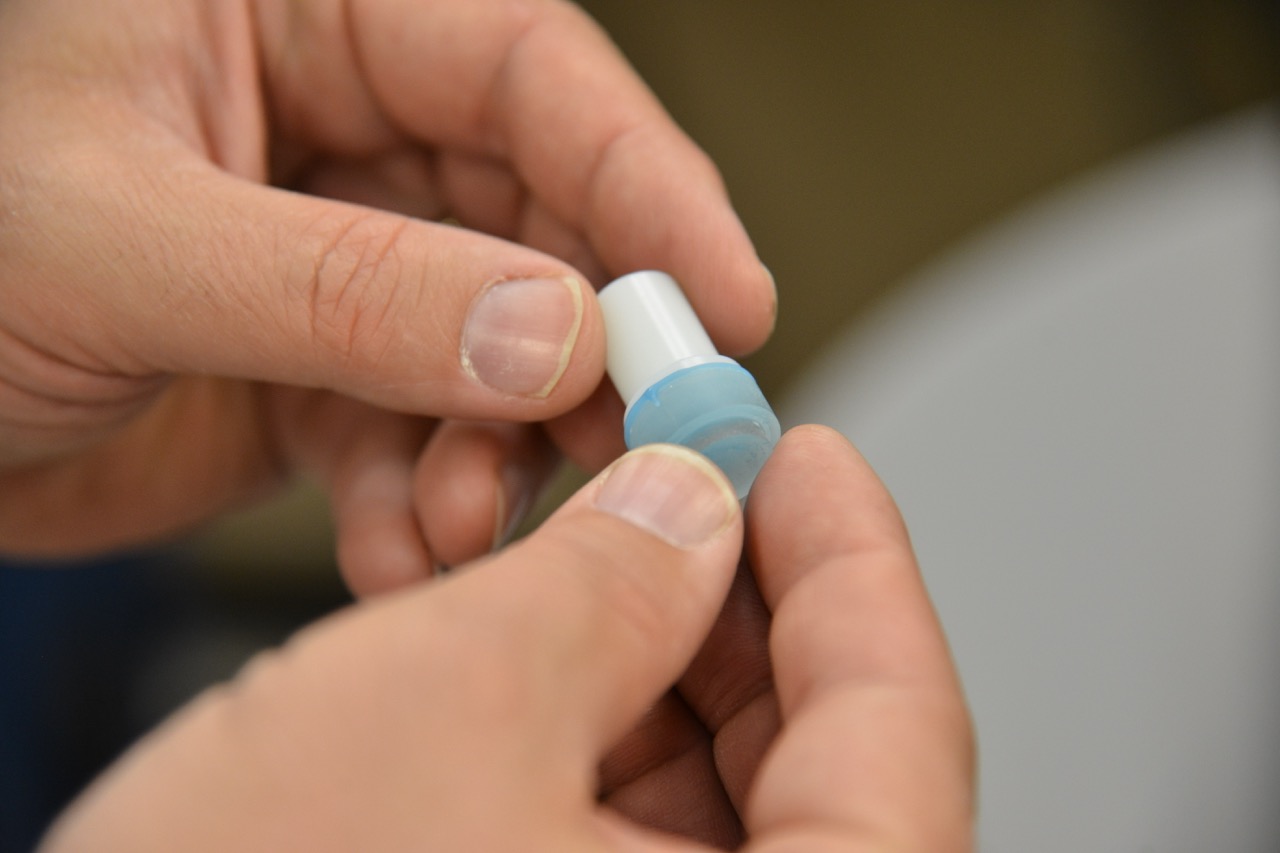
Here is an example of legacy blocking tools. There has been a notion to use oversized blocking tools (see GlobalCONTACT #3, 2014). The reason for this approach was to provide a firm clamping force on the blocking tool while being able to place a lens blank in the same collet without needing to adjust the collet clamping force to provide a delicate force on the blank. The procedure does allow the use of one collet for both front curve and base curve production. The problem with this procedure is the over-stressing of the collet and the lens blank. In the case of the collet, the oversize tools may permanently damage the collet. In the case of the lens blank, clamping it can yield poor optics.
There is a secondary effect that the legacy lab has had on our industry around the world. This effect has happened many times in technology transfers to developing markets. I have visited many labs where the owner partnered with a US or European lab to start a lab in their country. Visiting such a lab is like going back in time. Yes, they may have invested in new equipment, as I mentioned above, but they use the tooling design and the old processes, including pitch polishing from the parent lab. As with the example about the collet above, the “daughter” lab adopted the same collet/lens blank procedure. Even with new equipment, they were still having random prism problems due to the mis-match of the blocking tools and the lathe and blocker collets. I have found the resistance to improvement/change is greater in the daughter labs than in the parent lab.
The different mindset of start-ups
Now let’s compare the legacy lab to a new start-up lab. I’m going to make some assumptions about the new (ideal) lab owner:
She/he …
- is well-funded.
- understands the market.
- understands the regulatory environment in the market.
- understands the need for a trainable production manager.
Going into the start-up process, a new lab owner looks into machinery and the process to produce both soft lens and RGP corneal designs. At some point in the future, the lab may produce scleral lenses, so it would be good to have an easy transition to that process. The advantage, as I see it, is the unbiased and “no baggage” approach to the manufacturing process.
We would recommend the machines and tooling and process to produce these lenses. The benefit to the start-up is that we will work with the production manager and staff to be trained in contemporary CL manufacturing practices; keeping in mind that in five to ten years new processes and/or machinery will dictate production changes in the lab. This means the lab owner can be assured of having a state-of-the-art facility and can concentrate on the front office and sales, growing the company rather than managing the minutia of lens manufacturing. It is easier to leave that to the lab manager/support group partnership. By that, I am referring to the relationship that the production manager has with the machinery/tooling/consumables’ vendors.
Seizing the opportunity for change
Now, let’s look at the start-up from the veteran lab owner’s perspective. The concept of a start-up is foreign to most seasoned lab owners. If he/she were to consider the four points listed above, they might decide not to get into the business. But let’s assume that they want to stay in. They may be considering a new location or a secondary production facility, possibly in a different country. This could be an opportunity to train new people in contemporary lab practices as if it truly was a start-up. It would require that the lab owner accept the contemporary practices and hire a production manager who will promote them. This must be difficult, because I don’t see it happening very often.
There is also a side benefit to adopting the contemporary process: if the implementation is successful, the lab owner can install it in the original lab.
The start-up culture is one of forward-thinking process planning. It is a culture of improvement. I know of a few labs that maintain the startup culture. The goal is to improve the production level and or lens quality every year and everyone in the company is engaged in the goal. One could say, with reason, that this is an unrealistic expectation after several years. But a culture that is developed can stay in place and continue to generate a successful enterprise. One thing is for sure, this lab stays current.
This article illustrates two processes that are utilized to start a new CL lab.
1. Approach: an existing lab to assist and provide advice with the start-up.
2. Approach: the material and machine vendors to recommend the best course.
What are the advantages and disadvantages of each approach?
Approach 1:
Pros: Experience with sales, regulatory, human resources
Cons: Manufacturing process uses antiquated equipment, software, and processes. May provide legacy process training (may not be compatible with modern equipment).
Approach 2:
Pros: Material vendors can advise on best practices and regulatory approval. Machinery vendors can advise on current equipment and processes and can provide current process training.
Cons: Limited on sales, regulatory, and human resources.
It is apparent that a mix of working with an existing lab and then bringing in contemporary knowledge of the material, machine vendors, plus lab software is probably the best arrangement.
As far as process is concerned, certain steps excel. This centers around blocking the lens blank. Many advantages come with this process which I have discussed in the past.
The main point is that this process allows the result of the base curve radius (BCR) to be so predictable that it does not need to be verified. This is now being done in some labs, yielding a reduction in the cost of goods sold. These results are used in labs utilizing autoloaders on the lathes where real time inspection is not practical because of “lights out” production. Imagin the cost savings by just eliminating inspection for BCR! This approach can be incorporated in other steps in the process.
Then as now, labs can adopt that culture and make improvements to improve profitability. There are people who can take you there.